
Sealing / Warm seam
Sealing wooden houses and filling cracks and crevices is a set of measures aimed at minimizing negative impacts resulting from air, moisture, precipitation, etc. This set of measures has become widespread in the field of wooden housing construction due to the development of polymers in recent decades.
Sealing seams and cracks in a wooden house with sealants replaced primarily the time-tested method of caulking these crevices with felt, tow, etc. This is due to the fact that wood as a living material has several characteristic features: to increase/decrease in size in thickness and length under the influence of moisture, and also that it does not have, like any natural organism, absolutely even geometry, primarily in length.
During operation and complete drying (shrinkage), which lasts approximately two to three years, its warping (mainly bending) occurs, stresses arise, which leads to the appearance of cracks in the crowns and crevices between them. This problem can significantly reduce the energy efficiency of a house due to the loss of warm air through the crevices to the outside and cold air entering inside. It primarily concerns houses made of rounded and profiled timber (houses made of glued timber, as a rule, do not have such diseases or have them to a much lesser extent). Also, the presence of crevices and cracks can lead to wood damage and the onset of the rotting process.
Main goals of sealing:
- Increasing the energy efficiency of a wooden house;
- Preventing the emergence of wood damage foci in crevices and cracks;
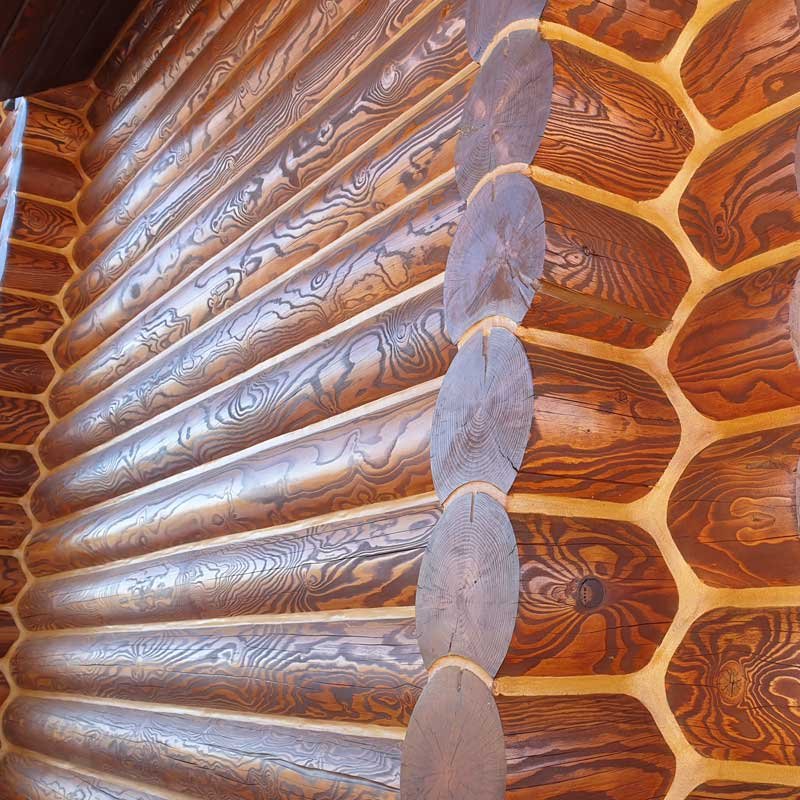
- Giving a finished aesthetic look to a wooden house.
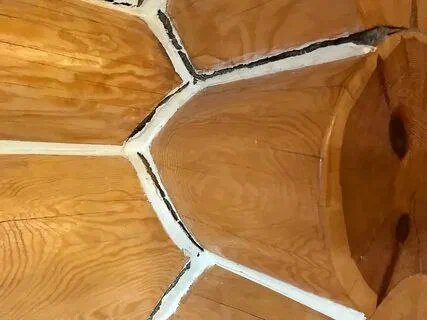
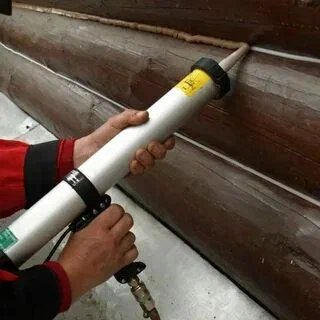
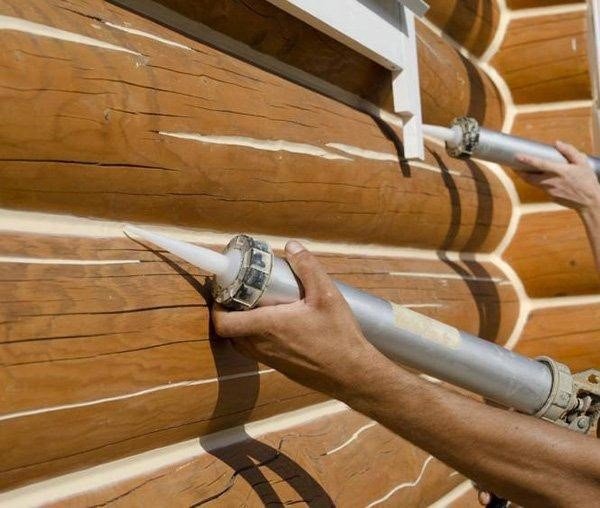
It is performed in different ways or their combination: sealing by applying acrylic and polyurethane sealants with special guns (manual, pneumatic, electric), laying various sealing polymer cords, etc.
How we work: sealing stages
Measurement and inspection
Moisture measurement. Inspection of crevices and cracks for their depth and thickness. Choice of sealing method. Checking the condition of the wood.
Sealant removal
Removing old sealant with a tool and cleaning seams and cracks with brushes and stripping. If agreed.
Caulking removal
Removing old caulking, cords along the entire length, passing checking the condition of the wood during the execution of work. If agreed.
Sealing seams
Sealing cracks, seams using polypropylene cords of different diameters. If agreed.
Sealant application
Preparing the surface for sealing, sealing seams and cracks with the appropriate sealant.
Cleaning and delivery
Cleaning after the sealing process, removing sealant traces on structures that were not subject to sealing.
Wood sealing is divided into types by:
- Type of composition and binder: acrylic, polyurethane, silicone, cork;
- Type of location of the product: inside or outside;
- Type of load on the coating: floor, wall/ceiling;
- Possibility of painting: paintable, non-paintable.
Approximate cost of work
| Name of service | Cost |
|---|---|
| Removal of caulking from crevices and cracks in wooden houses outside/inside | From 24 UAH per 1 linear meter |
| Removal of old sealant from crevices and cracks in wooden houses outside/inside | From 30 UAH per 1 linear meter |
| Sealing cracks and crevices before sealing with a foam propylene cord | From 35 UAH per 1 linear meter |
| Sealing seams, cracks, crevices in wooden houses using sealant ("Warm seam") | From 60 UAH per 1 linear meter |